
Introducing Facet: a procedural brand image system built with agentic coding
2026-03-16 • Scott Boyle
How AI-assisted workflows helped turn the Measured visual system into a procedural image tool, without lowering UI standards or output quality.
The context
This post relies heavily on two core concepts, agentic engineering and flexible visual systems. So let’s define those.
Agentic engineering
I’ll leave this to Simon Willison, who draws a useful distinction between agentic engineering and vibe coding:
I think of vibe coding using its original definition of coding where you pay no attention to the code at all … Agentic Engineering represents the other end of the scale: professional software engineers using coding agents to improve and accelerate their work by amplifying their existing expertise.
We’ve been using agentic engineering approaches heavily over the past year in both personal and professional contexts.
Flexible visual systems
Flexible Visual Systems by Martin Lorenz outlines an approach to visual brand identity that goes beyond the static logo. It’s a method for defining a visual language that can produce many consistent expressions.

The Measured visual brand system was designed using a process inspired by this approach (in collaboration with designer James Cross).
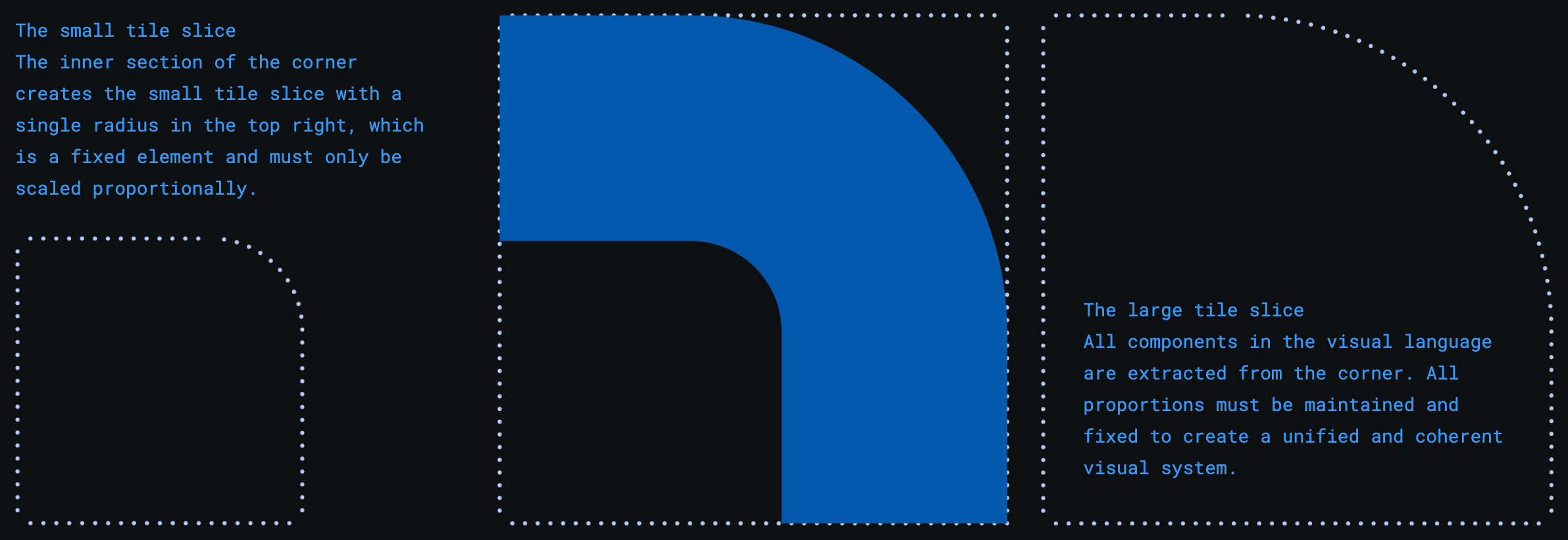
Key to a flexible system is shape as a core component of the grammar. In the Measured system, that core shape is The Corner (plus related derived components).
The problem
Measured blog posts use abstract/geometric images (banner, OG, other social) that express the visual system identity and feel recognisably Measured.
We had a small set of compositions from the original identity work to use for these, but we had effectively run out.

The idea
We decided to build a tool to generate new images for Measured posts and campaigns, using constraints from the Measured visual system.
The inspiration
The creative direction came from Processing-style generative art: not AI image generation, but procedural systems.
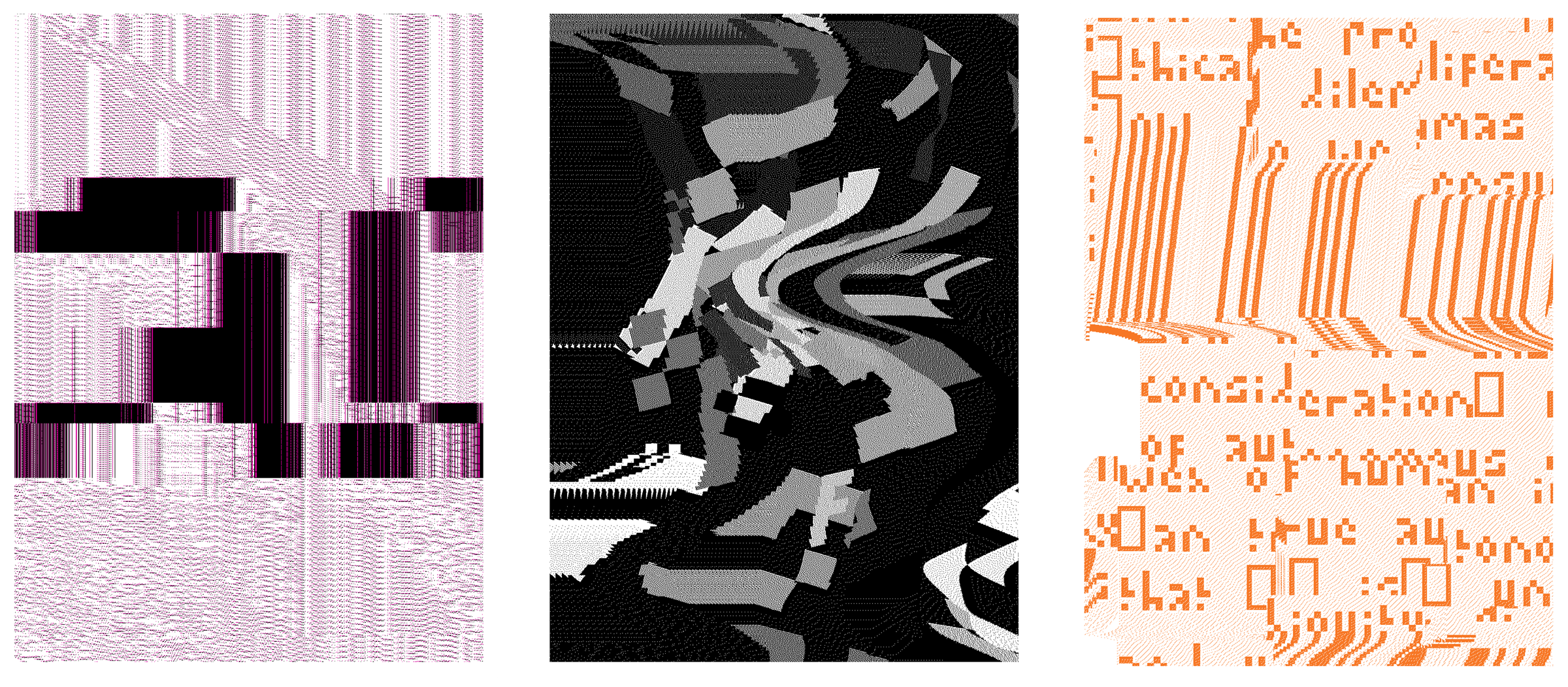
I’ve always enjoyed this space, for example, the work of Mark Webster.
But I’d never gone deep with Processing before, and the learning curve looked steep.
The question
So could agentic coding help bridge that gap?
Despite regular use of agentic engineering workflows, I’d yet to lean into vibe coding for anything serious. At Measured, we’re accountable for the production code we ship to clients, so every line is reviewed.
But this project felt like a good time to give “letting go” a try.
The experiment
The concept was bounded by three principles:
- Let the agent write all the p5.js generation code, with no review (vibed).
- Use agentic assistance plus in-browser review for UI/UX iteration.
- Keep strong constraints from the Measured visual brand system.
The process
I started by writing a planning doc (with agent assistance) that defined the goal, palette rules, component SVG paths and art-direction constraints.
Then from a one-shot prompt, I immediately got a functioning baseline: canvas, generate action and download action. This was pretty surprising for a few minutes’ work.
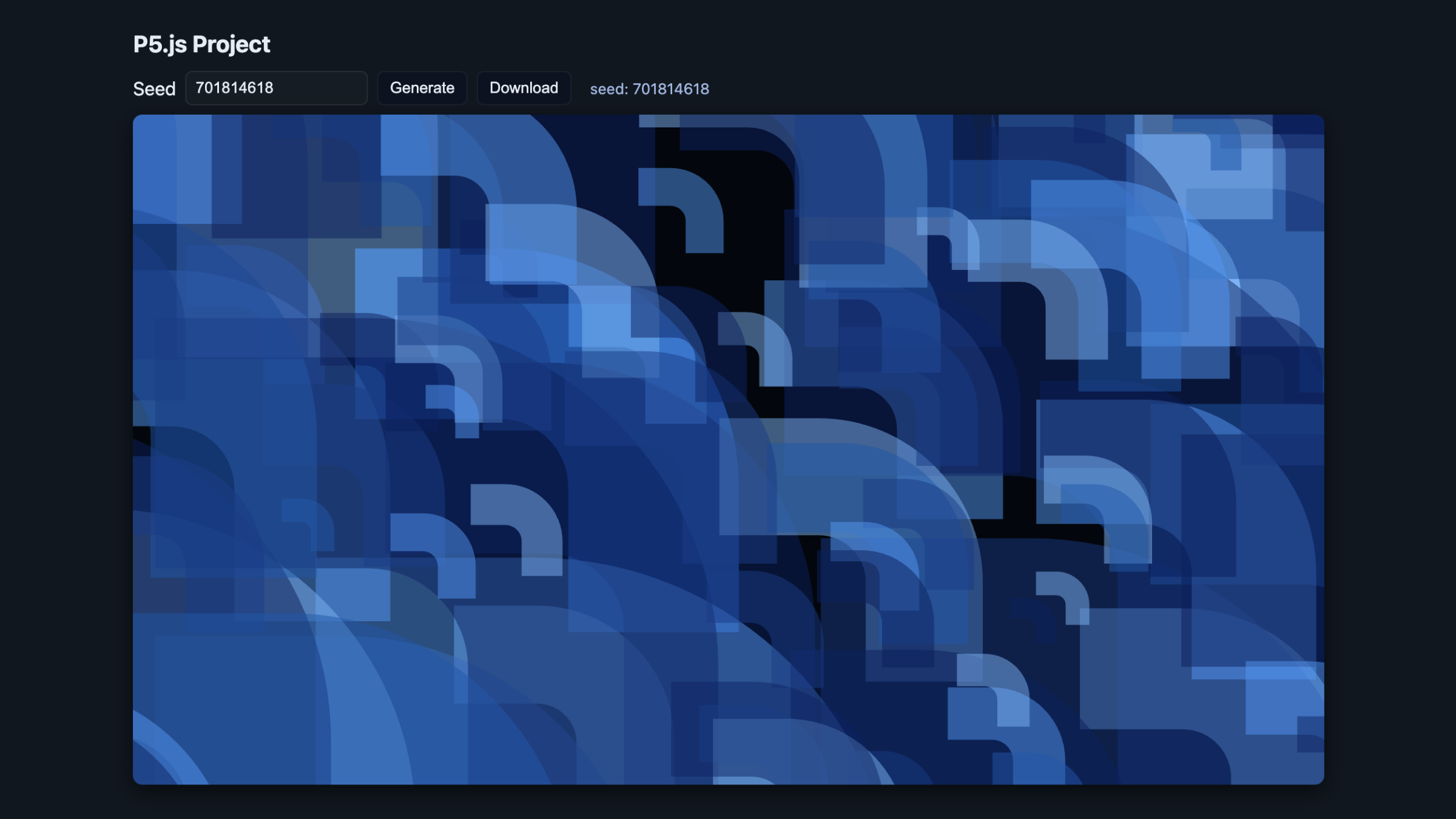
What followed was iterative: propose a feature, implement it, review it in-browser; accept, tweak or reject it. Describing outcomes in plain language worked really well for this kind of build, as most decisions were visual or behavioural.
Collaboration with the agent (Codex 5.3 in VS Code in this case) was substantive. Beyond defining features, I also asked for tradeoffs between approaches, new feature suggestions, code performance reviews and plan iteration. What I got back was generally insightful input that helped inform the direction I chose.
I also learnt a lot about p5.js and Processing. Whilst still being very much a novice, I was able to generate visually coherent and usable results.
The UI quality bar
As a design engineer, I set a high bar for brand consistency, interaction quality and accessibility. The generated UI was useful early on, but not at a standard we would want to publish as a Measured project. So I did get more hands-on with the UI and UX, requesting specific HTML patterns for accessibility and hand-coding CSS.
Accessibility in particular was a point of failure: the agent produced a lot of plausible-looking aria slop that, on inspection, turned out to be anti-patterns rather than best practice.
The combination that worked:
- Rapid agent iteration (design-in-browser speed).
- Human refinement for interaction detail, accessibility, and brand fit.
Results
Here’s the finished app: Facet.
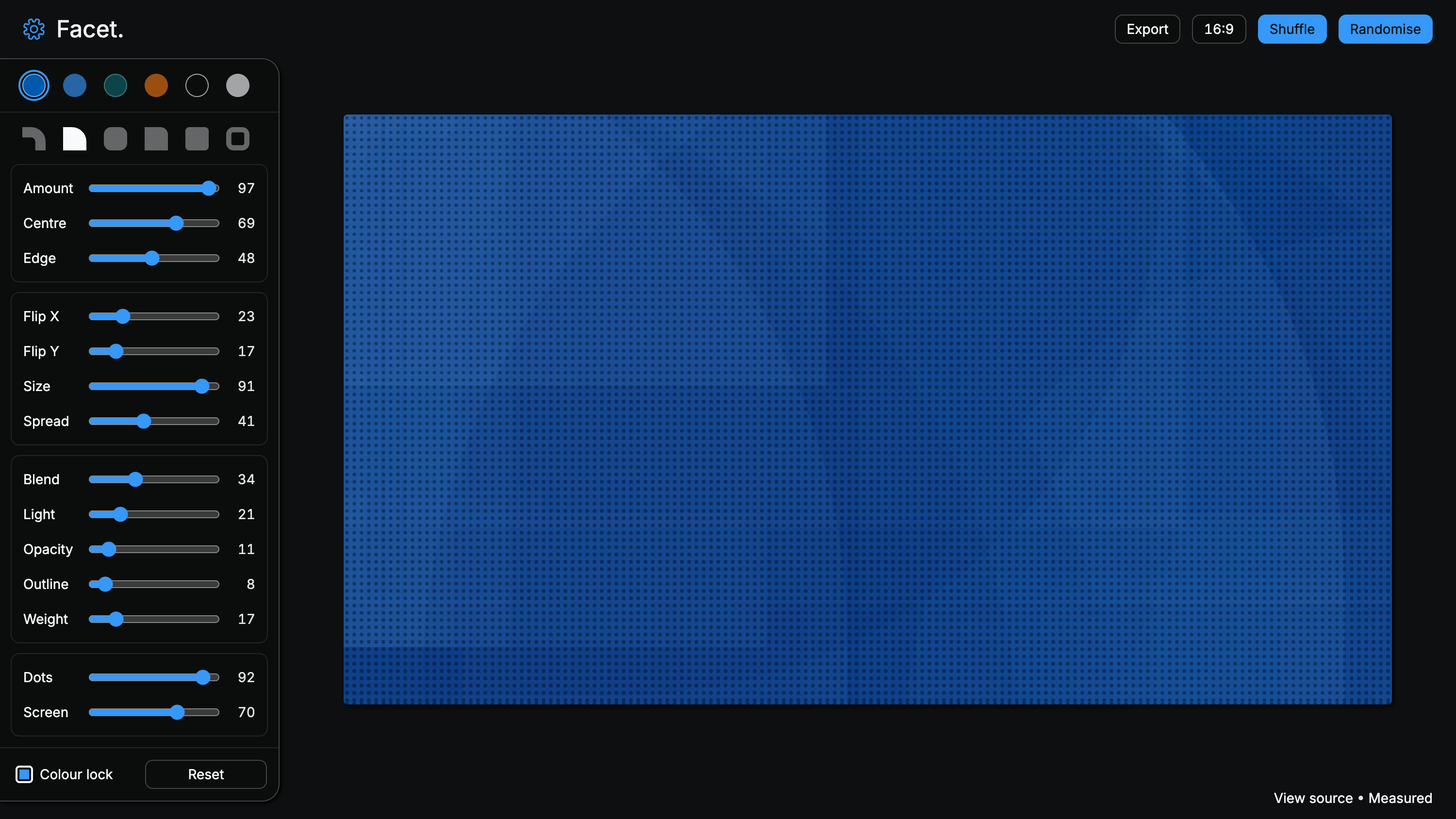
And here are some example images created with Facet’s Randomise and Shuffle functions using brand primary colours.

I also introduced alternative palettes to add variety, though in practice their use would be limited to special cases to avoid brand dilution.

Takeaways
For this project, agentic workflows weren’t just about a quick result. They lowered the barrier to building a custom creative tool that would otherwise have been completely blocked by library and domain learning curves. The agent also proved an educational and collaborative creative partner.
But what really made this work for us was applying our own constraints, iteration and judgement.
Try Facet and let me know what you think.